Inward Journey Through Chakra Awakening Ancient Lost Techniques for your Spiritual Growth Inspired by the teachings of Acharya Shree Yogeesh YouTube Channel: @AcharyaShreeYogeesh
Introduction
Chakra awakening is not a mystical fantasy nor a religious ritual. According to Acharya Shree Yogeesh, yoga is a scientific system of self-development—a disciplined path for purification of the body, mind, and awakening the Soul. The chakra system represents seven primary energy centers within the subtle body. When these centers are balanced and activated, energy flows upward, transforming instinct into intuition and survival into spiritual awareness.
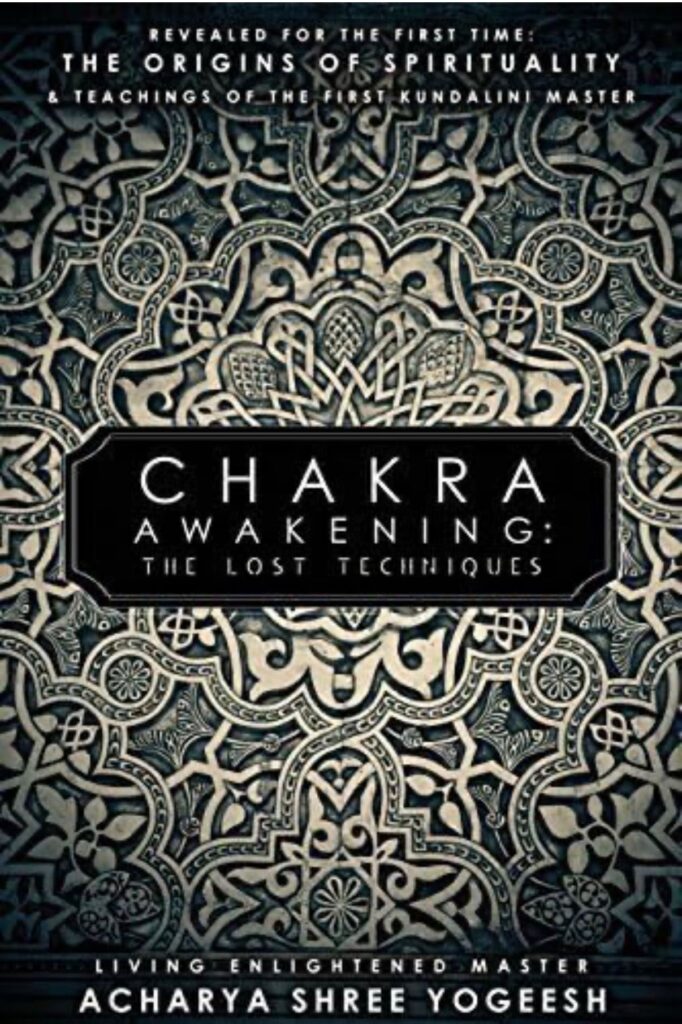
In the book Chakra Awakening: The Lost Techniques, Acharya Shree Yogeesh revealed for the first time the teachings of the first Kundalini Master Tirthankara Parshwanath. He explains that imbalance in these energy centers results in emotional instability, physical disturbances, mental confusion, and spiritual stagnation. Awakening them requires awareness, breath control, visualization, ethical living, discipline, and meditation—not blind belief. True Teachings are revealed here. They are all simple and practical. You will not find this information anywhere except in this book, because many are lost and most of them are misinterpreted.
The book describes many lost ancient and lesser-known techniques for chakra activation that go far beyond simple color visualization and mantra chanting. Once you read this book you will definitely say Whaat? Wow? and realize what the world has been missing out on so much REAL stuff about Chakra Awakening. Through these ancient techniques, practitioners can consciously purify blockages and gradually awaken each chakra in a safe and structured way.
The Seven Chakras and Advanced Techniques for Awakening
Muladhara (Root Chakra) – Main Source
Location: Base of the spine (in men, near the reproductive organ; in women, near the ovaries). Color: Red
Seed Sound: Mispronounced as Lam (Real Pronunciation is “LUNG”)
Gland: Suprarenal gland.
Affected Organs: Kidneys, bladder, and spine.
Role: When active, it promotes balance, stability, security, and a feeling of being present and connected to the physical body. An underactive Mooladhara can lead to fear and nervousness, while an overactive one can cause materialism and greed. To activate it, visualize red light and chant “Lam” (lung). This chakra is vital for survival as it generates life force energy. When its energy is low or flows downwards, it can lead to negative thoughts, jealousy, and excessive indulgence in sexual acts, affecting the associated organs. Healing and activating this chakra are crucial for positive energy flow.
Swadhisthana (Sacral Chakra) – Emotional and Creative Flow
Location: Below the navel
Color: Orange
Seed Sound: Mispronounced as Vam (Real Pronunciation is “VANG”)
Gland: Gonads.
Affected Organs: Reproductive organs (ovaries in women, sperm-producing organs in men) and legs.
Role: Dysfunction in this chakra can make individuals feel scattered, uncomfortable around people, scared, and withdrawn, indicating an unactivated or imbalanced chakra. It represents feelings and sexuality. When open, it allows for emotional expression without being overly emotional and helps with sexual function. An underactive Swadhisthana can lead to emotional detachment, while an overactive one can cause hypersensitivity, excessive emotionality, and heightened sexual energy. To balance it, visualize orange light, water elements like oceans or rivers, and chant “Vam” (Vang).
Manipura (Solar Plexus Chakra) – Fire of Willpower
Location: Navel region
Color: Yellow
Seed Sound: Mispronounced as Ram (Real Pronunciation is “Rung”)
Gland: Pancreas.
Affected Organs: Stomach, liver, and gallbladder.
Role: The pancreas is a crucial gland, and if its function is impaired, it significantly affects the stomach, liver (which can be damaged), and gallbladder (which can develop stones). It is important to ensure energy flows upwards through this chakra to prevent these issues. An open Manipura brings confidence, control, grace, and dignity, especially in group settings. Underactivity can result in passivity and indecisiveness, while overactivity can lead to aggression. To balance it, visualize yellow fire and chant “Ram” (rung).
Anahata (Heart Chakra) – Compassion and Spiritual Expansion
Location: Center of chest
Color: Green
Seed Sound: Mispronounced as Yam (Real Pronunciation is “Yung”)
Gland: Thymus gland.
Affected Organs: Heart, liver, lungs, and blood circulation.
Role: This chakra is the center of unconditional affection, brotherliness, spiritual growth, compassion, devotion, and love. When energy flows upwards to this chakra, it promotes feelings of empathy, brotherhood, and spiritual connection. Keeping the thymus gland healthy is essential for the proper functioning of the heart and associated organs. Anahata (Heart Chakra): Associated with the color green, this fourth chakra is the heart chakra. Its element is air. When open, it fosters care, love, and good relationships with others. An underactive Anahata can make someone cold and unfriendly, while an overactive one can lead to suffocating love or selfishness. To balance it, visualize green light and chant “Yam” (Yung).
Vishuddhi (Throat Chakra) – Purification and Truth
Location: Throat
Color: Blue
Seed Sound: Mispronounced as Ham (Real Pronunciation is “Hung”)
Gland: Thyroid gland.
Affected Organs: Throat, upper lungs, arms, and digestive system.
Role: This chakra is associated with purification of thoughts, communication, self-expression, and creativity. As energy moves higher, negative thoughts like jealousy dissipate. A healthy thyroid gland and an activated throat chakra allow for clear communication and can even lead to hearing inner voices or connecting with “extra worlds.” Vishuddha (Throat Chakra): When open, it allows for clear expression and good communication. Underactivity can cause shyness and difficulty speaking, while overactivity can lead to excessive talking, nagging, and not listening to others. To activate and balance it, visualize it under the moonlight in the open sky.
Ajna (Third Eye Chakra) – Intuition and Inner Vision
Location: Between the eyebrows
Color: Indigo
Seed Sound: Om
Gland: Pituitary gland.
Affected Organs: Spine, lower brain, left eye, nose, and ears.
Role: This chakra is crucial for willpower, intellect, spirit, and visualizing. Opening the third eye initiates spiritual awakening and is the starting point for many mystic traditions. Ajna (Third Eye Chakra): The sixth chakra, located between the eyebrows, is blue. An active Ajna brings excellent clarity and vivid dreams. Underactivity can cause reliance on others for belief and thought, as well as confusion. Overactivity can lead to excessive daydreaming and hallucinations. To balance it, visualize blue color and chant “Om” (om).
Sahasrara (Crown Chakra) – Pure Consciousness
Location: Top of head
Color: Violet / White / Pink
Sound: Silence
Gland: Pineal gland.
Affected Organs: Upper brain.
Role: This chakra leads to enlightenment, intuition, spiritual vision, and clairvoyance. It is the pinnacle of spiritual development. It is associated with consciousness. When open, it promotes a lack of prejudice, spirituality, and mental flexibility. An overactive Sahasrara can lead to neglecting one’s physical body while an underactive one can result in a lack of spirituality and rigid thoughts. To activate it, visualize the color pink at the top of the head and focus on consciousness, which is shapeless and formless. In conclusion, maintaining the health and proper activation of these chakras ensures energy flows correctly, leading to improved physical health, mental clarity, and profound spiritual growth. The speaker plans to detail activation methods in future discussions.
The Upward Flow of Energy
Acharya Shree’s teaching emphasizes that energy must move upward. Downward-flowing energy fuels fear, jealousy, attachment, and indulgence. Upward-flowing energy transforms into clarity, compassion, intuition, and spiritual awareness.
Above all are the teachings of Acharya Shree Yogeesh.
In life, we unknowingly close our own inner doors. Through ignorance, unconscious habits, unethical choices, dishonesty, and disconnection from our true self, we block our own energy centers — our chakras.
But the good news is this:
The very awareness that helps us recognize these patterns becomes the key to reopening them.
How Do We Unlock Ourselves?
We unlock ourselves through:
- Knowledge from enlightened wisdom
- Ethical living
- Honesty in thoughts, speech, and actions
- Conscious choices in what we eat, watch, speak, and consume
- Daily spiritual practice
Spiritual growth is not complicated. It does not require expensive or complex systems. The path is simple — but it requires sincerity.
It means bringing awareness into:
- How you speak
- How you respond
- What you watch
- What you eat
- How you think
- How you treat others
- How you treat yourself
Every action either blocks or opens your energy.
Practice Is the Real Transformation
Reading spiritual knowledge is not enough.
Believing in it is not enough.
The true shift happens through practice.
Practice:
- Pranayama
- Meditation (sitting with yourself)
- Self-analysis
- Positive affirmations
- Ethical and conscious living
When practiced consistently, these simple techniques create profound transformation.
Spiritual advancement is not about collecting information.
It is about embodying wisdom.
The Ultimate Goal
The purpose of awakening your chakras is not to gain mystical powers.
The real goal is:
- Self-mastery
- Inner balance
- Freedom from ignorance
- Liberation from reactive patterns
- Living in truth
When your energy centers open naturally through right living and awareness, you begin to:
- Know yourself deeply
- Act consciously
- Speak truthfully
- Live peacefully
And that is true spiritual awakening.
Awaken Your Chakras. Know Yourself.
The key is already in your hands.
Practice — and unlock your highest self.
Resources
Book:
Chakra Awakening: The Lost Techniques by Acharya Shree Yogeesh
Website: AcharyaShreeYogeesh.com
Written by:
Shailaja
Dedicated Student of Acharya Shree Yogeesh.
Shailaja is here to SHARE. (In-Person & Online Programs)
Email: Shailajaperigroup@gmail.com